
Turning Everyday Household Items Into Learning Adventures
You don’t need a room full of expensive toys to help your child learn and grow; I mean how many times have you caught your child playing with an empty box, toilet paper or your brand new bottle of expensive lotion.
In fact, some of the best learning opportunities can come from items you already have around the house. Children are naturally curious, and with a little creativity, everyday objects can become tools for exploration, imagination, problem-solving, and skill-building.
The best part? These simple activities encourage hands-on learning while strengthening important developmental skills like language, fine motor coordination, creativity, early math concepts, and independent thinking. Here are five easy ways to turn ordinary household items into extraordinary play experiences.
Water, Water, Everywhere!
Water has a magical way of making familiar objects exciting again. Whether you’re at the kitchen sink, in the bathtub, or outside with a small tub of water, adding water instantly creates opportunities for discovery and learning.
Offer plastic figurines, toy vehicles, blocks, or kitchen utensils and watch your child’s imagination take over. Cups, measuring spoons, funnels, and containers of different sizes encourage pouring, scooping, and experimenting with concepts like volume and measurement.
Looking for even more ideas? Fill a spray bottle with water and let your child water plants, wash windows, or create outdoor art. Spraying also helps strengthen the small muscles in their hands, which are important for future writing skills.
You can even create simple sensory experiences by mixing water with flour to make a quick dough or combining water and cornstarch to create oobleck—a fascinating substance that feels both solid and liquid. For a mess-free art activity, hand your child a paintbrush and a cup of water and let them paint disappearing pictures on colored paper or sidewalks.
Water play supports creativity, problem-solving, sensory exploration, and fine motor development while keeping children engaged for long periods of time.
Search For Letters
Before tossing old magazines, newspapers, junk mail, or empty food boxes into the recycling bin, consider giving them a second life as learning tools.
Invite your child to search for letters, especially the letters in their name. Younger children can point them out, while older children can circle, trace, or cut them out. This simple activity helps build letter recognition and early literacy skills in a playful, low-pressure way.
These materials can also become art supplies. Children can tear, cut, color, glue, and create collages, strengthening hand muscles and coordination while expressing their creativity.
Don’t overlook empty cereal boxes, milk cartons, or food containers. They can become pretend groceries for a play kitchen, building blocks for construction projects, or props for imaginative storytelling.
By incorporating print into everyday play, children begin to understand that letters, words, and symbols have meaning all around them.
What’s In The Hole?!
Children are naturally fascinated by objects with holes because they invite experimentation. Colanders, strainers, baskets, tissue boxes, toilet paper tubes, and even cardboard boxes can become exciting learning tools.
Gather materials that can fit through the holes, such as pipe cleaners, yarn, ribbon, fabric scraps, shoelaces, or straws. Babies often enjoy pulling objects out, while toddlers can practice pushing items through openings. Older children may enjoy weaving materials in and out to create patterns.
These activities strengthen hand-eye coordination, fine motor skills, and problem-solving abilities. Children also begin exploring cause and effect as they observe what happens when objects pass through different openings.
For extra fun, shine a flashlight through holes and explore shadows and light patterns. Or combine this activity with water play by using colanders and strainers to watch water flow through different-sized openings.
Simple materials can lead to surprisingly rich learning experiences.
Make the Most of Multiples
Take a look around your home and find items you have plenty of: socks, spoons, cotton balls, plastic cups, canned goods, bottle caps, or blocks.
Collections of similar objects are perfect for introducing early math concepts. Children can count, sort, stack, compare, match, and create patterns. They can organize items by size, color, shape, or purpose, all while developing critical thinking skills.
Identical objects can be used to build towers, create shapes, or form letters. Non-identical items provide opportunities to discuss similarities and differences.
Turn it into a game by creating a scavenger hunt. How many socks can your child find? Can they sort them into matching pairs? Can they build the tallest tower with plastic cups?
Activities like these help children develop number sense, observation skills, and an understanding of patterns and categories—all important foundations for future learning.
Follow Your Child’s Lead
Perhaps the most important tip of all is to let your child take the lead whenever possible.
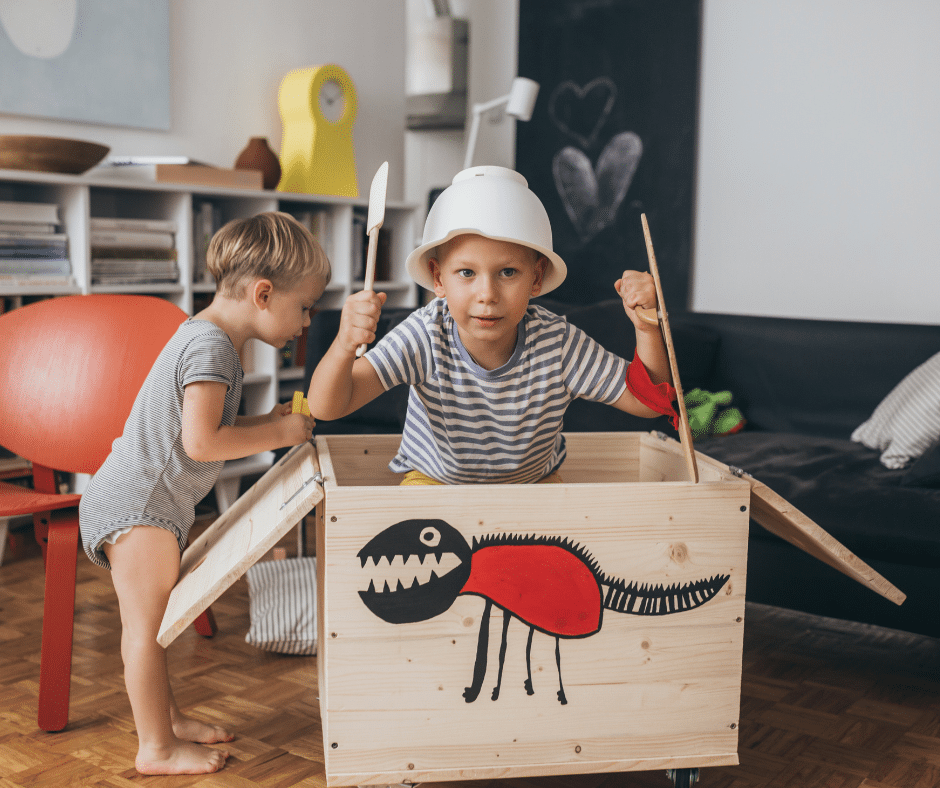
Adults often approach play with a plan, but children have an incredible ability to see possibilities that we might miss. A cardboard box might become a spaceship, a blanket might become a cave, and a spoon might become a microphone.
When your child comes up with a new idea, try to follow their curiosity. Ask questions, observe, and see where their imagination takes them. If an idea isn’t safe, think about whether there’s a way to modify it rather than shutting it down completely.
Child-led play encourages creativity, confidence, decision-making, and problem-solving. It also gives children the chance to practice independence and learn through trial and error.
Sometimes the most meaningful learning happens when we step back and allow children to explore the world in their own unique way.
Remember: Learning Happens Everywhere
Children learn best through everyday experiences, and some of the most valuable learning opportunities don’t require special equipment or elaborate plans. By using items already found around your home, you can create engaging play experiences that support your child’s development while making memories together.
The next time you’re about to recycle a box, put away a basket, or toss a stack of magazines, take a second look—you might just be holding your child’s next favorite learning activity.