
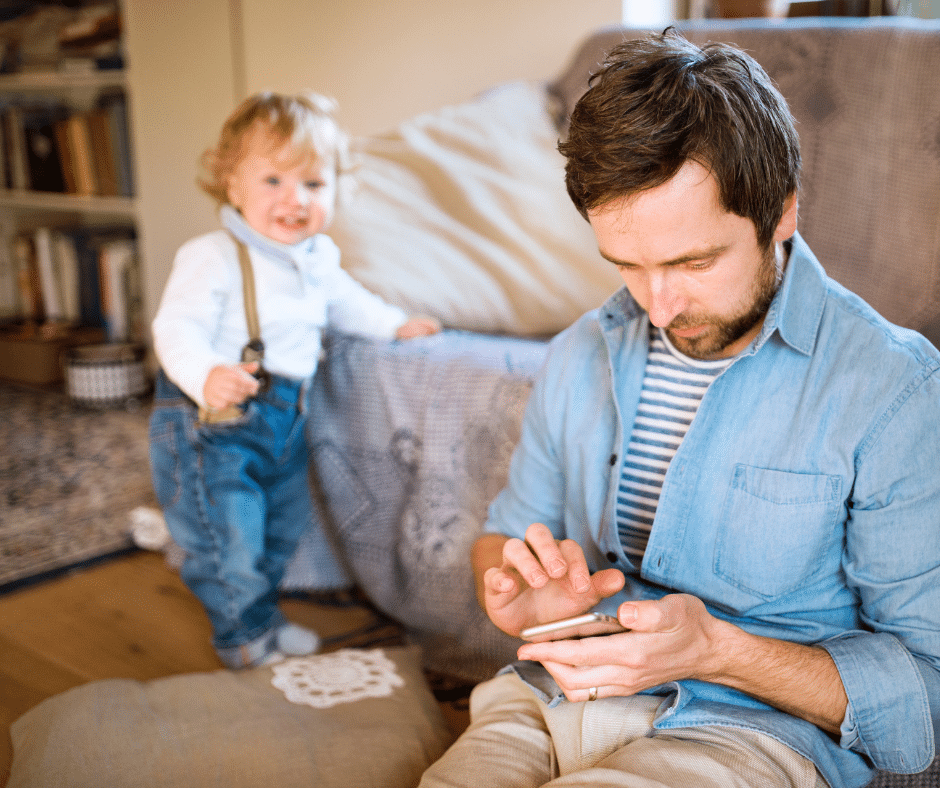
Smartphones, Babies, and the Importance of Being Present
We’re all guilty of it regardless of knowing that spending too much time on our phones can affect our mental health and our relationships. But we continue to do it; we’re all looking for a way to decompress and zone out for a few minutes from the challenges at work, raising kids and family drama. But for new parents, phone use can have an even bigger impact. Using digital devices while caring for a baby may affect how infants grow and connect. Research shows that frequent smartphone use around babies is linked to developmental concerns, including challenges with forming secure attachments.
Becoming a parent is a key moment for building healthy habits. Expectant parents talk with many professionals during pregnancy and early parenting—but studies found that they rarely receive clear, coordinated guidance on how to manage phone use around their babies.
Adult smartphone use rarely comes up during well-child visits; I mean there’s only so much you can talk about in fifteen minutes. Secure attachment is essential for a baby’s healthy development. Babies need hours of face-to-face time with their caregivers to help their brains grow. That happens best when parents are emotionally present and responsive to their baby’s cues. A good moment for this is during feedings; having that physical connection (weather breast feeding or bottle feeding) looking and exploring baby’s face while baby does the same. Using times like these help build that secure attachment in your baby.
Constant phone use can get in the way of that connection. When caregivers are distracted by their devices, it can interrupt the sensitivity and availability babies rely on to feel safe and supported. Just like when you are talking to someone you want their full attention; you don’t want them looking at their phone, making you feel like you’re not as important to them as what’s on their phone.
Babies are born with immature nervous systems and senses, yet they enter a fast-paced world full of screens, sounds, and digital distractions. This makes caregivers especially important as a kind of “human filter,” helping protect infants from being overwhelmed. Psychologists call the frequent interruptions caused by technology during caregiving “technoference.” A caregiver’s attention shifts from the baby to the phone, creating what’s been described as an “absent presence.” The phone becomes a kind of social pollution in the relationship.
While this feels frustrating for anyone on the receiving end, it’s especially harmful for babies. Their connection with trusted adults is what helps them feel safe enough to learn and grow. When that connection is disrupted during such a sensitive stage of development, the impact is much greater. During infancy babies are wired to look to their caregiver’s face for signals of safety. Smartphone use can flatten facial expressions and reduce interaction, which has been shown to cause stress responses in babies.
Research also shows practical effects: babies are more likely to be overfed when caregivers use phones during feeding, and frequent notification sounds are linked to fewer spoken words by 18 months. And it’s not just babies who are affected. Many parents report that their own phone use causes stress or guilt, suggesting they, too, would benefit from more intentional and reduced smartphone habits.
Some public health experts are now urging healthcare providers to look beyond just the baby and parent as individuals—and to also consider the parent-infant relationship itself. That shared space is being strained by smartphone-distracted care. Babies’ brains grow incredibly fast. We can’t afford to let that process be disrupted by the pull of the attention economy. Research has shown that new parents want and need more guidance and support around digital device use. We also recommend that family members adjust their phone habits around new babies. Creating a family media plan and having open conversations can make a real difference.